On a somber Saturday, the renowned retail chain Party City sought bankruptcy protection, marking a significant turning point in its history. This move followed the announcement of extensive layoffs at its New Jersey base, casting a shadow over the company's future. According to court documents obtained by CBS News, the bankruptcy filing was lodged in the Southern District of Texas' bankruptcy court, with the company's liabilities estimated to be within the staggering range of $1 billion to $10 billion.
The news of the layoffs was communicated to employees by Karen McGowan, Party City's Chief Human Resources Officer, in an email that was obtained by CBS News New York. She informed the staff that the company was initiating an immediate "mass layoff" at its Woodcliff Lake, New Jersey headquarters, a decision that undoubtedly sent ripples of uncertainty and concern through the ranks of employees.
Adding to the distress, on the preceding day, Party City's CEO, Barry Litwin, had informed corporate staff during a meeting that the company was "winding down" its operations. This revelation was a stark indication of the dire financial situation the company was facing. Furthermore, some store employees received correspondence on Friday stating that all of the chain's stores would be shutting down in February, as reported.
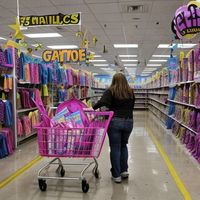
Party City, a specialist in party supplies, was established in the mid-1980s and had grown to boast over 700 company-owned and franchised store locations across North America, as stated on the company's website. The news of its bankruptcy and store closures is a blow not only to its employees but also to the many customers who have relied on the chain for their party needs over the years. The company also operates an e-commerce platform through PartyCity.com, the future of which now hangs in the balance, leaving consumers wondering about the availability of their favorite party supplies.
The year 2024 has been particularly challenging for U.S. retailers, with Party City's situation being just one of the many stories of struggle and adaptation. Data from research firm CoreSight indicates that there were more than 7,100 store closures by the end of November 2024, marking a 69% increase from the same period the previous year. This trend reflects the broader economic challenges and shifts in consumer behavior that have impacted the retail sector.
The rise of e-commerce and changing consumer preferences have significantly altered the retail landscape, with many shoppers opting for the convenience of online shopping over visiting physical stores. This shift has put immense pressure on brick-and-mortar retailers, forcing them to adapt their business models and find new ways to attract and retain customers. For Party City, the bankruptcy filing and store closures are a stark reminder of the need for innovation and resilience in the face of these challenges.
Moreover, the economic climate has also played a role in the struggles faced by retailers. The ongoing global economic uncertainties, fluctuations in consumer spending, and rising costs have made it increasingly difficult for businesses to maintain profitability and sustain growth. Party City's financial woes are a reflection of the broader economic headwinds that have affected many companies across various industries.
The impact of Party City's bankruptcy and store closures will be felt not only by its employees and customers but also by the communities it served. The loss of jobs and the closure of local stores can have a ripple effect on the local economy, affecting other businesses that rely on the foot traffic and consumer spending generated by the retail chain.
As the retail industry continues to evolve and adapt to the changing landscape, it is crucial for businesses to focus on innovation, customer experience, and building strong connections with their communities. This may involve embracing digital technologies, offering unique and personalized shopping experiences, and finding ways to differentiate themselves from competitors.
In the case of Party City, the bankruptcy filing and store closures serve as a cautionary tale for other retailers facing similar challenges. It highlights the importance of being proactive in addressing financial issues, exploring new business strategies, and being willing to make tough decisions in order to ensure long-term sustainability.
In conclusion, the bankruptcy filing by Party City and the subsequent store closures are a significant event in the retail industry, reflecting the broader challenges faced by businesses in adapting to a rapidly changing economic and consumer landscape. As the industry continues to evolve, it is essential for retailers to focus on innovation, customer experience, and community engagement in order to thrive and remain competitive in the years to come.

By Samuel Cooper/Dec 22, 2024

By James Moore/Dec 22, 2024

By George Bailey/Dec 22, 2024

By David Anderson/Dec 22, 2024
By Sophia Lewis/Dec 22, 2024

By Ryan Martin/Dec 22, 2024
By Benjamin Evans/Dec 22, 2024

By Jessica Lee/Dec 22, 2024

By Amanda Phillips/Dec 22, 2024

By Noah Bell/Dec 22, 2024

By Emma Thompson/Dec 21, 2024

By Joshua Howard/Dec 21, 2024

By Amanda Phillips/Dec 21, 2024

By Victoria Gonzalez/Dec 21, 2024

By Laura Wilson/Dec 21, 2024

By Jessica Lee/Dec 21, 2024

By William Miller/Dec 21, 2024

By Eric Ward/Dec 21, 2024

By William Miller/Dec 21, 2024

By Benjamin Evans/Dec 21, 2024