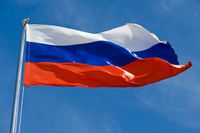
On Friday, the Central Bank of Russia made a surprising announcement by maintaining its key interest rate at 21%, a decision that diverged from market expectations. The bank justified this move by highlighting the enhanced monetary discipline that has been instrumental in curbing the rampant inflation. According to the bank's statement, "Monetary conditions have tightened more significantly than anticipated in the October key rate decision," attributing this to factors that are "autonomous" from its monetary policy framework. The bank further elaborated that "Given the substantial rise in interest rates for borrowers and the deceleration of credit activity, the achieved tightness of monetary conditions lays the groundwork for the resumption of disinflation processes and the return of inflation to the target, even amidst the current high price increases and robust domestic demand."
Contrary to widespread market predictions for an additional 200 basis point rate hike on Friday, following a similar move in October, the central bank has chosen to keep rates steady. This decision comes in the context of ongoing efforts to combat inflation, which has been fueled by the military expenditures related to Russia's invasion of Ukraine and the Western sanctions on its key commodity exports. The bank indicated that it would reassess the necessity for a key rate increase at its forthcoming meeting in February. It currently projects that annual inflation will moderate to 4% by 2026 and remain at this target level in the subsequent period.
Russia's consumer price index (CPI) currently exceeds this target rate, with annual inflation reaching 9.5% as of December 16, according to the bank's report on Friday. This figure underscores ongoing pressures, particularly in the household and business sectors. The CPI had previously stood at 8.9% in November on an annual basis, marking an increase from 8.5% in October. The uptick was largely attributed to the surge in food prices, with the cost of milk and dairy products experiencing a significant rise this year.
The decision to hold interest rates steady comes even after Russian President Vladimir Putin acknowledged the problematic nature of the nation's inflation during his annual Q&A session with the Russian public on Thursday. He admitted that there were signs of an overheating economy but maintained that Russia could still achieve an economic growth rate of 3.9%-4% for the year. Putin emphasized, "Of course, inflation is such an alarming signal. Just yesterday, when I was preparing for today's event, I spoke with the chairperson of the Central Bank, Elvira [Nabiullina] who told me that it was already somewhere around 9.3%. But wages have grown by 9% in real terms, I want to emphasize this — in real terms minus inflation — and the disposable income of the population has also grown," as reported by Interfax and translated by Google.
The International Monetary Fund (IMF) forecasts that Russia will achieve a growth rate of 3.6% this year, followed by a deceleration to 1.3% growth in 2025. The IMF described the "sharp slowdown" as a result of "private consumption and investment slowing amid reduced tightness in the labor market and slower wage growth." Alfred Kammer, director of the European Department at the IMF, explained the situation when the fund released its latest economic outlook in October, stating, "What we are seeing right now in the Russian economy is that it is pushing against capacity constraints. So we have a positive output gap, or you could put it differently — the Russian economy is overheating. What we are expecting for next year is simply also the impact that going over your supply capacity, you cannot maintain for very long. So we see an impact on moving into more normal territory there. And of course, that is supported by a tight monetary policy by the Central Bank of Russia." Kammer added, "A tight monetary policy, in order to bring down inflation, slows down aggregate demand, and in 2025 will have these effects on GDP. That's why we are seeing the slowdown in 2025."
By Samuel Cooper/Dec 22, 2024

By James Moore/Dec 22, 2024
By George Bailey/Dec 22, 2024

By David Anderson/Dec 22, 2024

By Sophia Lewis/Dec 22, 2024

By Ryan Martin/Dec 22, 2024
By Benjamin Evans/Dec 22, 2024

By Jessica Lee/Dec 22, 2024

By Amanda Phillips/Dec 22, 2024

By Noah Bell/Dec 22, 2024

By Emma Thompson/Dec 21, 2024

By Joshua Howard/Dec 21, 2024

By Amanda Phillips/Dec 21, 2024

By Victoria Gonzalez/Dec 21, 2024
By Laura Wilson/Dec 21, 2024

By Jessica Lee/Dec 21, 2024

By William Miller/Dec 21, 2024

By Eric Ward/Dec 21, 2024

By William Miller/Dec 21, 2024

By Benjamin Evans/Dec 21, 2024